

When should you replace your tyres in Australia? It’s a question many drivers ask too late. Most people wait until something feels wrong, a vibration, reduced grip, or a sudden issue on the road. But tyres rarely fail without warning. The signs are usually there well before the problem.
As Australia moves into April, the shift from summer heat to cooler, wetter conditions makes tyre safety even more important. This is the time when worn tyres become more dangerous, especially on longer drives and busy roads.
Tyres don’t suddenly fail; wear builds over time
It’s easy to think tyre blowouts happen randomly. In reality, they develop slowly.
Heat from summer driving weakens rubber. Daily use reduces tread. Small damage gets worse over time. Then, when conditions change — like cooler mornings or wet roads — the risks increase quickly.
Most tyre failures are linked to:
- Driving on worn tread
- Heat damage from previous months
- Incorrect tyre pressure
- Ignoring small cracks or bulges
That’s why understanding when should you replace your tyres in Australia is about spotting issues early — not reacting late.
How to tell if your tyres need replacing
You don’t need technical knowledge to check your tyres. A few simple observations can make a big difference.
Here’s what to look for:
Low tread depth
Tread keeps your car stable, especially in wet conditions. If it’s worn down to 1.6mm or less, your tyres are unsafe and illegal in Australia.
Cracks in the rubber
Heat and age can dry out tyres. Even small cracks weaken the structure and increase the risk of failure.
Bulges or bubbles
This is a serious warning sign. It often means internal damage and can lead to sudden blowouts.
Uneven wear patterns
If one side wears faster, it may point to alignment or pressure issues.
Frequent pressure loss
If you’re topping up air often, there could be a slow leak or hidden damage.
If you notice any of these, it’s time to act. not wait.
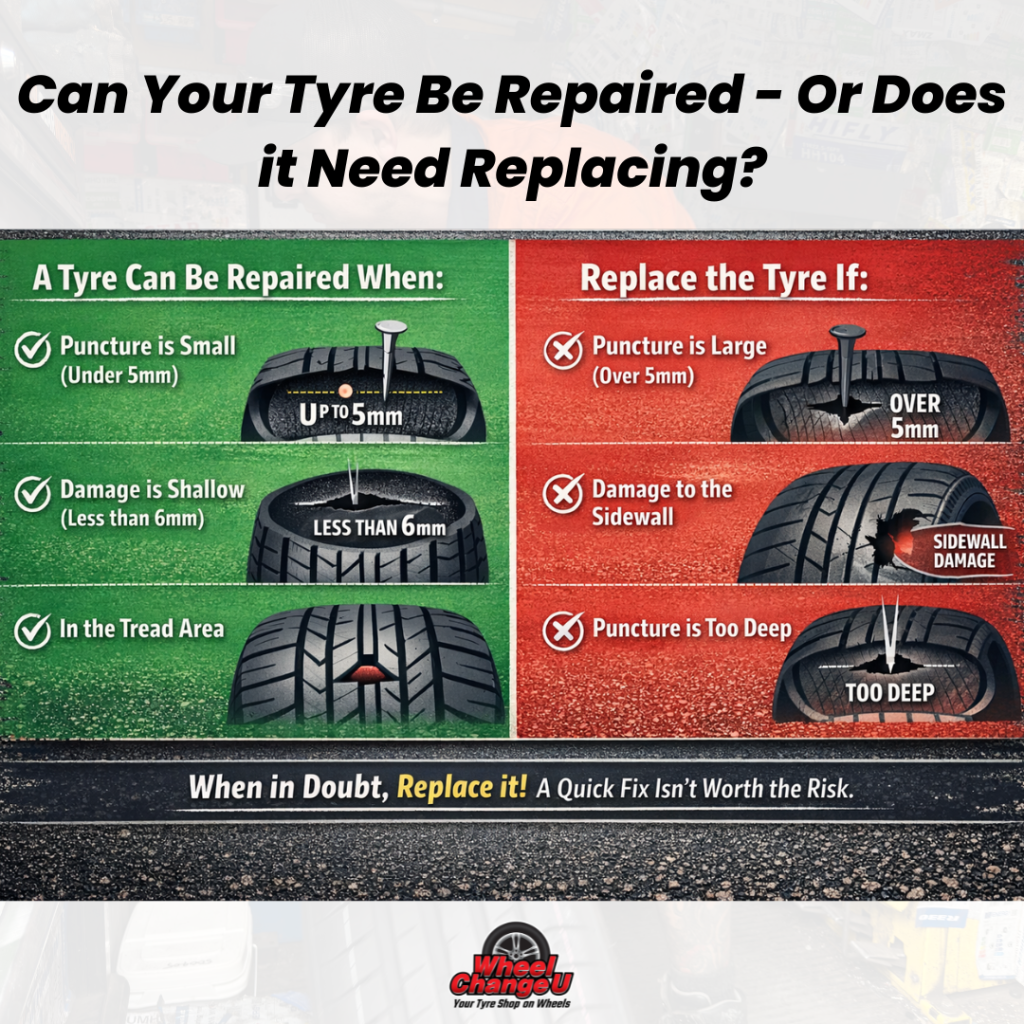
Can your tyre be repaired or replaced?
Not every issue requires a full replacement, but there are clear limits.
A tyre can usually be repaired if:
- The puncture is under 5mm wide
- The damage is less than 6mm deep
- It’s located in the tread area
However, replacement is the safer option if:
- The damage is on the sidewall
- The puncture is too large
- There are multiple weak spots
When in doubt, safety should always come first.
Why tyre pressure matters more
As temperatures drop slightly in April, tyre pressure can change faster than expected.
Underinflated tyres are especially risky because they:
- Generate more heat while driving
- Increase stopping distances
- Reduce handling and control
- Wear out faster
Overinflated tyres aren’t ideal either. They reduce road contact and wear unevenly.
Regular pressure checks are one of the easiest ways to stay safe. It only takes a few minutes but can prevent serious issues.
A quick tyre check before your next drive
Many drivers still ask when should you replace your tyres in Australia, especially after long summer drives and changing road conditions.
Before heading out; whether it’s a weekend trip or daily commute, take a moment to check:
- Tread depth across all tyres
- Tyre pressure (when cold)
- Visible cracks, cuts, or bulges
- Uneven wear
- Spare tyre condition
These small checks can save you from bigger problems later.
How Wheel Change U makes tyre care easier
Life gets busy. Not everyone has time to visit a workshop.
That’s where Wheel Change U comes in.
With mobile tyre services, you can get:
- On-site tyre inspections
- Repairs and replacements at your location
- Fast, convenient service at home or work
There’s no need to rearrange your day. It’s a simple way to stay on top of tyre safety; especially during busy April schedules. If you’re unsure when should you replace your tyres in Australia, a quick check now can prevent costly and dangerous issues later.
Book your tyre check today
Tyres are often overlooked until something goes wrong
But staying ahead is simple. Regular checks, knowing the warning signs, and acting early can help you avoid unnecessary risks.
So, when should you replace your tyres in Australia? Before they give you a reason to.